Table Of Content

This method increases the probability that each arm will contain an equal number of individuals by sequencing participant assignments by block. Yet still, the allocation process may be predictable, for example, when the investigator is not blind and the block size is fixed. This paper provides an overview of blocked randomization and illustrates how to avoid selection bias by using random block sizes.
Book traversal links for 8.9 - Randomized Block Design: Two-way MANOVA
A randomized block design is a type of experiment where participants who share certain characteristics are grouped together to form blocks, and then the treatment (or intervention) gets randomly assigned within each block. Bilateral cervical erector spinae block using ultrasound has recently been studied for shoulder surgery [9]. In a cadaver study, it was found that injecting a 20 mL dye solution into the TP of C6 or C7 resulted in staining of the C5-T1 nerve roots [10].
Lateral Sagittal Versus Costoclavicular Approaches for Ultrasound-Guided Infraclavicular Brachial Plexus Block: A ... - Cureus
Lateral Sagittal Versus Costoclavicular Approaches for Ultrasound-Guided Infraclavicular Brachial Plexus Block: A ....
Posted: Fri, 26 Mar 2021 07:00:00 GMT [source]
What is a Blocking Variable?
As you have seen from the procedure described above, it shouldn't come as a surprise that it is very difficult to include many blocking variables. Also, as the number of blocking variables increases, we need to create more blocks. Each block has to have a sufficient group size for statistical analysis, therefore, the sample size can increase rather quickly. The selection of blocking variables should be based on previous literature. With small sample sizes, using simple randomization alone can produce, just by chance, unbalanced groups regarding the patients’ initial characteristics.
What is a Randomized Block Experiment?
In each block, for each treatment, we are going to observe a vector of variables. This type of experimental design is also used in medical trials where people with similar characteristics are in each block. This may be people who weigh about the same, are of the same sex, same age, or whatever factor is deemed important for that particular experiment.
A regional analgesia block is a technique used to suppress nerve transmission and alleviate or prevent pain. Be sure to have the "Sample with Replacement" box unchecked so that all treatment levels will be assigned to the same number of pots, giving rise to a proper completely randomized design for a specified number of replicates. The widespread use of the statistically in-valid RTTG design, which is not found in any reputable textbooks, may account for a substantial fraction of the observed irreproducibility.
Ultrasound guided intermediate cervical plexus block
No patients required an additional dose of fentanyl beyond the initial dose in both groups. All blocks were conducted under sterile conditions in the operating room with sedation “midazolam 0.03–0.05 mg/kg as needed”. He wants to run an experiment since he has two kinds of corn and two types of fertilizer. Moreover, he knows that his plots are quite heterogeneous regarding sunshine, and therefore a systematic error could arise if sunshine does indeed facilitate corn cultivation. When in doubt, decide on the number of blocks based on previous literature.
4 Randomized Block Designs
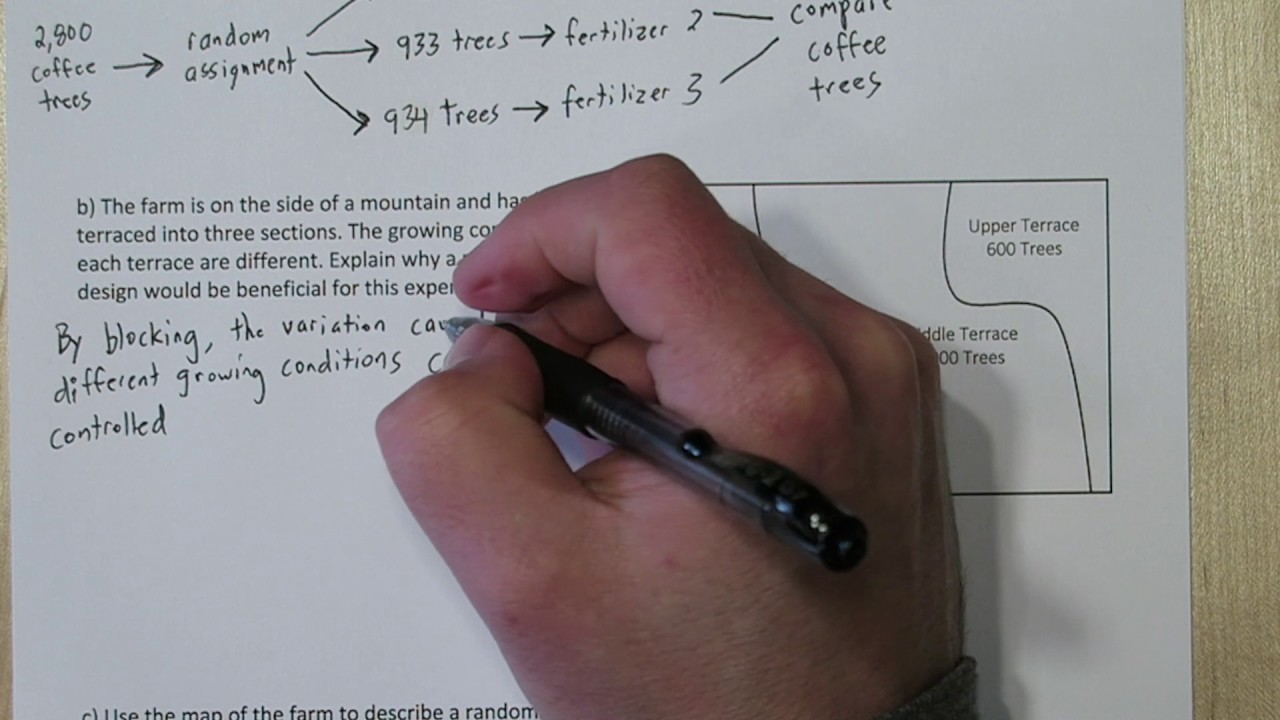
A potential control variable would be driving experience as it most likely has an effect on driving ability. We will then divide up the participants into multiple groups or blocks, so that those in each block share similar driving experiences. For example, let's say we decide to place them into three blocks based on driving experience - seasoned; intermediate; inexperienced. Significant treatment imbalances and accidental bias typically do not occur in large blinded trials, especially if randomization can be performed at the onset of the study.
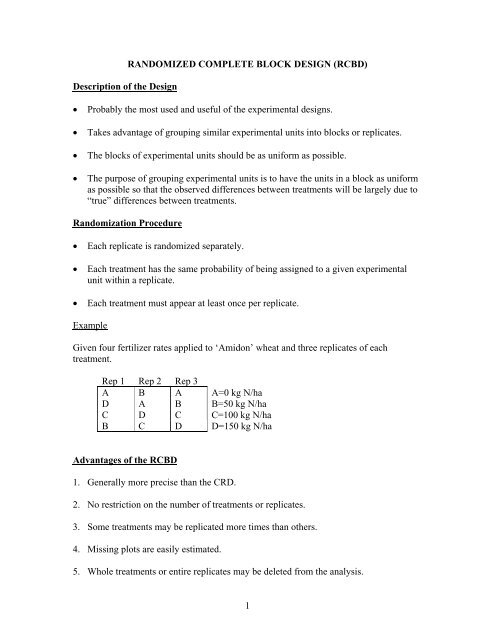
The advantage of using random block sizes to reduce selection bias is only observed when assignments can be determined with certainty [1]. That is, when the assignment is not known with certainty but rather is just more probable, then there is no advantage to using random block sizes. The best protection against selection bias is to blind both the ordering of blocks and their respective size. Block randomization works by randomizing participants within blocks such that an equal number are assigned to each treatment. For example, given a block size of 4, there are 6 possible ways to equally assign participants to a block. Allocation proceeds by randomly selecting one of the orderings and assigning the next block of participants to study groups according to the specified sequence.
Rationale, design and critical end points for the Riluzole in Acute Spinal Cord Injury Study (RISCIS): a randomized ... - Nature.com
Rationale, design and critical end points for the Riluzole in Acute Spinal Cord Injury Study (RISCIS): a randomized ....
Posted: Tue, 23 Jun 2015 07:00:00 GMT [source]
Randomized Block Design
The patient has the right to withdraw from the study at any time without any negative consequences for their medical or surgical treatment plan. Research scientists are sometimes urged to “randomise their subjects to treatment groups”. According to Chambers Twentieth Century Dictionary (1972) the word “group” can mean “a number of persons or things together” or “a number of individual things related in some definite way differentiating them from others”.
For example, special analytic techniques may be needed when the missing data is related to treatment effects or occurs in some other non random manner [1,3]. However, datasets with missing-at-random observations may be analyzed by simply excluding the affected blocks. When possible, measures should be implemented to minimize missing values as their presence will reduce the power of statistical procedures. As the number of blocking variables increases, the number of blocks created increases, approaching the sample size — i.e. the number of participants in each block would be very low, creating a problem for the randomized block design. However, Kendall et al. [26] in their meta-analysis reported that patients undergoing orthopedic or spine surgeries experienced pain relief for up to 12 h postoperative when comparing erector spinae block with a control group. However, the procedure took less time to be performed and the sensory block started earlier with similar complications.
This may inadvertently expose the identity of the compound in a clinical trial if the comparator compound is not light sensitive. Unmasking also may be intentional in the case of a physician chemically analyzing a patient’s blood to determine the identity of the randomized drug. To date, no study has been found comparing intermediate cervical block and cervical erector spinae block in patients undergoing anterior cervical spine surgery. Using the example from the last section, we are conducting an experiment on the effect of cell phone use (yes vs. no) on driving ability. The independent variable is cell phone use and the dependent variable is driving ability.
Typically, smaller block sizes will lead to more balanced groups by time than larger block sizes. However, a small block size increases the risk that the allocation process may be predictable, especially if the assignment is open or there is a chance for unmasking of the treatment assignment. For example, certain immunosuppressive agents change color when exposed to light.
In other words, when the error term is inflated, the percentage of variability explained by the statistical model diminishes. So if you don’t block, you will reduce the statistical power of the study. Performance time and onset time were shorter in the IC group and comparable with published data by Vloka, Hipskind [5, 14, 15]. No repetitive opioid doses had to be administered intraoperatively, which we interpret as sufficient regional anesthesia during surgery (duration maximum 90 min) [16,17,18,19]. The total number of patients who experienced postoperative complications such as nausea, vomiting, bradycardia, hypotension, phrenic paresis, and Horner's syndrome was similar between the two groups (P ≥ 0.05) (Table 3). The characteristics of the patients and the duration of surgery were similar between the two groups (Table 1).


No comments:
Post a Comment